PARKER L50-04-M7 Watts Pneumatic Injection Lubricator Npt L50-04/M7 1/2 150
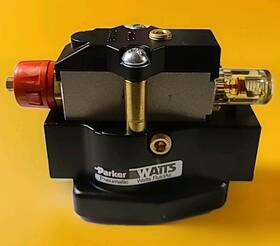
( Brand: Parker ), ( Manufacturer Part Number: L50-04/M7 ), ( Part Type: Pneumatic Lubricator ), ( Port Diameter: 1/2 In ), ( Maximum Pressure: 150 Psi ), ( Country Of Origin: United States )
Review PARKER L50-04/m7 Watts Pneumatic Injection Lubricator 1/2 Inch Npt 150 Psi
The **Parker L50-04/M7 Watts Pneumatic Injection Lubricator (1/2 NPT, 150 PSI)** is a precision-engineered, high-performance lubrication system designed to deliver consistent, metered lubrication to critical moving parts in industrial machinery, hydraulic systems, and pneumatic applications. Built with Parker s reputation for reliability and innovation, this lubricator combines robust construction with advanced pneumatic control to ensure efficient, automated lubrication without manual intervention. The unit operates on a simple yet effective principle: compressed air drives a piston that forces lubricant through a precisely calibrated orifice, delivering a controlled dose of oil or grease directly into the system at regular intervals. With a **1/2 NPT threaded connection**, it seamlessly integrates into existing piping systems, making it ideal for applications where space is limited but performance demands are high. The **150 PSI pressure rating** ensures compatibility with standard industrial air supplies, while the **M7 Watts model** incorporates a durable, corrosion-resistant housing and a replaceable cartridge system for easy maintenance eliminating downtime and reducing long-term operational costs. Whether used in conveyor systems, hydraulic cylinders, or rotating machinery, this lubricator minimizes wear, prevents corrosion, and extends equipment lifespan by ensuring a consistent, thin film of lubricant is applied exactly where it s needed. Its compact yet sturdy design, combined with Parker s reputation for durability, makes it a trusted choice for engineers and maintenance teams seeking a dependable, low-maintenance solution for automated lubrication.
The **Parker L50-04/M7 Watts Pneumatic Injection Lubricator (1/2 NPT, 150 PSI)** is a widely used device for automated lubrication in industrial applications. Below is a detailed breakdown of its pros and cons, followed by a conclusion and recommendation.
---
### **Pros**
1. **Reliable and Durable Construction**
The Parker brand is known for high-quality industrial components, and this lubricator is built to withstand harsh environments. Its robust design ensures long-term performance, reducing the need for frequent replacements.
2. **Precise Lubrication Control**
The device allows for accurate metering of lubricant, ensuring consistent application without over- or under-lubrication. This helps extend equipment life by preventing wear from either excessive or insufficient lubrication.
3. **Automated Operation**
Since it operates pneumatically (via compressed air), it can be integrated into automated systems, reducing manual labor and improving efficiency in continuous production processes.
4. **Versatile Compatibility**
It supports multiple lubricant types (grease, oil, or synthetic fluids) and can be used across various industries, including manufacturing, automotive, and food processing, where precise lubrication is critical.
5. **Easy Installation and Maintenance**
The 1/2 NPT threading makes it straightforward to install on pipes or machinery. Parker provides clear documentation, and the design allows for simple adjustments or repairs without extensive downtime.
6. **Adjustable Flow Rates**
The lubricator can be fine-tuned to deliver different volumes of lubricant per cycle, accommodating varying operational needs.
7. **Corrosion-Resistant Materials**
Many Parker components are made from stainless steel or other corrosion-resistant materials, making it suitable for applications in wet or chemically aggressive environments.
8. **Compatibility with PLCs and Control Systems**
It can be easily integrated into larger automation systems, allowing for remote monitoring and control via PLCs or SCADA systems.
9. **Low Operating Costs**
Once installed, the primary cost is compressed air and lubricant, which are relatively inexpensive compared to the potential savings from reduced equipment wear and downtime.
10. **Widely Available Support and Spare Parts**
Parker has a global distribution network, ensuring easy access to replacement parts, technical support, and training resources.
---
### **Cons**
1. **Initial Cost**
The upfront purchase price of a Parker lubricator can be higher than some generic or lower-end alternatives, though this is often justified by its reliability and longevity.
2. **Dependence on Compressed Air**
The device requires a stable supply of compressed air, which may not always be available in all work environments. If air pressure fluctuates, it could affect lubrication consistency.
3. **Potential for Clogging**
If the lubricant is not properly filtered or if contaminants enter the system, the lubricator s internal passages or nozzles may clog over time, requiring cleaning or replacement.
4. **Limited Customization for Extreme Conditions**
While durable, it may not be ideal for extremely high-temperature or high-pressure applications beyond its rated capacity (150 PSI). Specialized lubricators may be needed for such environments.
5. **Training Required for Optimal Use**
Proper setup, calibration, and troubleshooting require some technical knowledge. Operators or maintenance personnel may need training to maximize efficiency and avoid misuse.
6. **Potential for Leaks**
Over time, seals or fittings may wear out, leading to air or lubricant leaks. Regular inspections are necessary to prevent downtime.
7. **Not Ideal for High-Volume, High-Speed Applications**
While effective for many industrial uses, it may struggle with extremely high-frequency lubrication demands (e.g., in some high-speed machining processes).
8. **Environmental Considerations**
If lubricant spills occur, they may require cleanup, and improper disposal of used lubricant could pose environmental risks. Proper containment and disposal procedures must be followed.
---
### **Conclusion**
The **Parker L50-04/M7 Watts Pneumatic Injection Lubricator** is a high-quality, reliable choice for automated lubrication in industrial settings. Its precision, durability, and ease of integration make it a strong investment for applications where consistent lubrication is critical. However, its higher initial cost and dependence on compressed air are factors to consider, particularly in environments with limited air supply or extreme operating conditions.
For most standard to moderately demanding industrial applications such as machinery maintenance, conveyor systems, or automated assembly lines this lubricator offers excellent performance and long-term cost savings. If budget is a constraint or if the application involves very high pressures or temperatures beyond its specifications, alternative lubrication methods (e.g., manual greasing, electric lubricators, or specialized pneumatic systems) may need to be evaluated.
---
### **Recommendation**
**Buy the Parker L50-04/M7 if:**- You require a **reliable, automated lubrication solution** for standard industrial applications.
- Your facility has **consistent compressed air supply** and can support the device s maintenance.
- You prioritize **long-term durability and precision** over short-term cost savings.
- You plan to integrate it into an **existing automation system** (PLC, SCADA, etc.).
**Consider alternatives if:**- Your budget is extremely limited, and you can find a **lower-cost, equally reliable lubricator** from another manufacturer.
- Your application involves **extreme pressures, temperatures, or corrosive environments** beyond the device s rated capacity.
- Compressed air is **unreliable or unavailable**, making manual or electric lubricators more practical.
- You need **high-frequency lubrication** that this model may not handle optimally.
For most users, the **Parker L50-04/M7 is a well-justified purchase** that delivers consistent performance and reduces maintenance headaches over time. Pair it with proper filtration, regular inspections, and operator training to ensure maximum efficiency.
Details:
Made by the reputable brand Parker in USA, this pneumatic injection lubricator ensures reliable and efficient operation for your air line needs. With a port diameter of 1/2 inch and maximum pressure rating 150 psi, this lubricator is suitable for various industrial applications. Its durable construction and precise engineering make it a valuable addition to any hydraulic or pneumatic system.
part #: l5004m7 prices
- $17.80-$47.84
specifications compressorpartzo:
- brand: Parker
- mpn: L50-04/m7
- part type: Pneumatic Lubricator
- port diameter: 1/2 In
- maximum pressure: 150 Psi
- country of origin: United States
seller compressorpartzo:
- city: Thiensville, Wisconsin
- # reviews: 1007
- rating: 99.3%
shipping compressorpartzo:
- class: Standard
- cost: $7.31
- carrier: USPS
- type: Calculated
- transit: 3-9 Days
- service: USPS Ground Advantage
general compressorpartzo:
- condition: Used
- Hydraulics, Pneumatics, Pumps Plumbing > Compressed Air Treatment > Air Line Lubricators
offer compressorpartzo:
- started: March 30, 2026
- best offers: True
- availability: In Stock
- options: Ship-to-home
- sold: 0
- quantity: 1
returns compressorpartzo:
- policy: No Returns
payments compressorpartzo:
- credit card: Diners-club
- other
- wallet: Google-pay
Parker L50-04-M7 Is Similar To:
- 2 Housing Psi 1 Tell-tale Filter 0-14p-1-10b---2 Parker 5800 Hydraulic (16.7% similar) Serial cartridge G01369 used. Parker tell tale 14P 1/1 0b m f 2 hydraulic filter housing 5800 psi 1/2 ' inlet outlet 400 bar 5800 psi max. To 48 states. Box, APOS, fops, or military mail box. Shipping 12. I can't ship via ups or on buyers account. The shipping price quoted is for areas in the ...(January 26th, 2015)
- 0.5881100b Parker Lubricator 035881100b 150psig (41.3% similar) Please for any questions or concerns. Do not forget about any other charges which are charged by the carrier...(July 11th, 2017)
- Npt 02l1a 1 Parker Lubricator 4 Mist Portable (36.4% similar) Location 3B...(January 29th, 2015)
- 02l2b Parker Air Inline Lubricator (44.4% similar) 3/8 male npt air line lubricator...(July 7th, 2017)
- 035821100b Parker Lubricator 1-4 Npt New (42.1% similar) New LOCATION-18-A1...(March 10th, 2017)
- 035828000 Parker Schrader Lubricator Service Free Shipping (33.3% similar) Parker Schroeder lubricator service kit free shipping this offer is for one Schroeder bellows. Ck my other ads to see more interesting items. This is new in its original package with instructions. View my other offers. This is sold as new and buyer has a 14 day right of return. Others see calculated...(January 20th, 2019)
- 035843000b Parker New Npt Standard Lubricator Psig (41.9% similar) ...(May 9th, 2018)
- 04l10ba Parker 1-4 Pneumatic Filter (42.2% similar) Parker 1/4 pneumatic filter regulator 04L10BA...(September 11th, 2017)
- Nib Model Parker 04l10gb 150psi Lubricator 4 Npt Polycarbonate Bowl 1 (41.4% similar) New with a opened box for picture purposes only...(February 12th, 2015)
- 05e12a13ab Parker Pneumatic Npt (38.1% similar) ...(October 1st, 2018)
- 05f22aa Parker Pneumatic Filter Npt (44% similar) ...(November 12th, 2018)